
Short answer
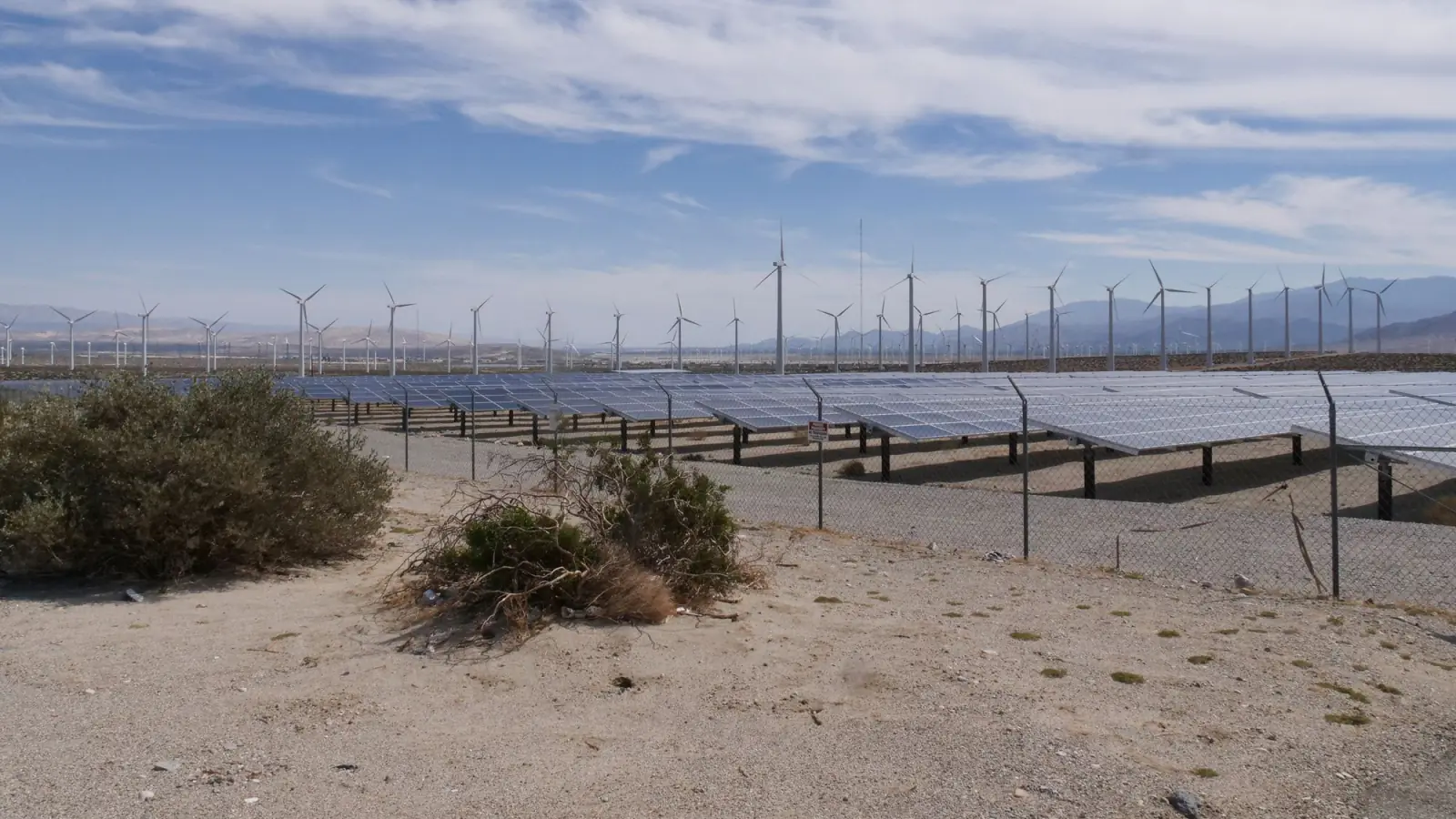
Solar and wind projects both depend on a good resource and a workable grid connection, but they differ on site: solar needs open land and strong sunlight and is built from many repeated modules, while wind needs site-specific wind data, turbine foundations, heavy-lift access and internal electrical infrastructure. In both cases the EPC scope includes engineering, civil and electrical works and connection to the grid.
Resource first, in both cases
A renewable project is only as good as its resource. For solar, the question is how much sunlight the site receives and how heat and dust change output. For wind, the question is the wind speed and pattern at turbine height, which varies sharply from one location to another. State-level impressions are not enough for either technology, and wind in particular needs site-specific measurement over time.
Solar and wind compared for EPC delivery
| Factor | Solar | Wind |
|---|---|---|
| Resource data | Solar irradiation, temperature and dust | Site-specific wind measurements over time |
| Land | Large, fairly level open area for modules | Spaced turbine locations with access roads |
| Foundations | Light foundations for mounting structures | Heavy civil foundations for each turbine |
| Construction | Many repeated, modular installation tasks | Fewer, heavier lifts needing cranes and wide access |
| Electrical | DC strings, inverters, transformers and cabling | Internal collection cabling and transformers |
| Grid connection | Plant substation and line to the grid | Plant substation and line to the grid |
The last row is the same for both: each plant needs substation and transmission-line works to reach the grid, so evacuation planning is a priority in either case.
Rajasthan site considerations
- Heat and dust: solar output is affected by temperature and soiling, and equipment of both kinds must tolerate harsh conditions.
- Sand and wind loads: structures and foundations for both technologies must be designed for site conditions.
- Remote sites: transport of heavy equipment, labour and supervision need planning, especially for wind turbines and large transformers.
- Grid availability: proximity to a suitable substation and available capacity can decide whether a site works.
What an EPC company does on each
On a solar project, an EPC company covers survey, engineering, procurement of modules, inverters and balance-of-system equipment, civil and structural works, mounting structures, AC and DC works, substation and transmission-line works, testing and commissioning. See solar parks and utility-scale projects.
On a wind project, Solaris provides engineering and execution support for civil foundations, internal electrical systems, substations, transmission lines and balance-of-plant works. See wind energy projects. The turbines themselves are outside the scope described here.
A site assessment checklist for either technology
- Resource data: solar irradiation records or site-specific wind measurements, with their source and duration stated.
- Land: clear title, enough area for the planned capacity, and suitable ground conditions confirmed by a geotechnical study.
- Access: roads that can carry heavy vehicles, and for wind, crane access to each turbine location.
- Grid: the nearest suitable substation, its available capacity, and the likely route for the connection line.
- Approvals: which permits and clearances apply to the technology, the capacity and the state, checked against current rules.
- Environment: constraints on the site that could change the layout, such as drainage paths, protected areas or nearby settlements.
A site that passes this checklist for one technology may not pass it for the other, which is one reason feasibility is done before design.
Choosing between them
The choice is rarely made in the abstract. It follows from the resource at the site, the land available, the connection point and the project goals. A feasibility assessment that tests both the resource and the grid connection is the sensible first step. Compare the lifecycle in the EPC capabilities overview to see which stages apply to your project.
Common questions
- Does Solaris Green Energy work on wind energy projects?
- Yes. Wind Energy Projects is one of Solaris's business segments. Solaris provides engineering and execution support for civil foundations, internal electrical systems, substations, transmission lines and balance-of-plant works.
- What data is needed to assess a wind site?
- Site-specific wind measurements over a meaningful period, together with land, access, geotechnical and grid connection information. State-level averages are not a substitute.
- Which is better for Rajasthan, solar or wind?
- Neither is better in general. The right choice depends on the resource at the specific site, the land, the grid connection point and the project goals, which a feasibility assessment should test.